Home > Research at ISEM > Research departments & teams > Evolutionary constraints and adaptative resilience team
Evolutionary constraints and adaptative resilience team
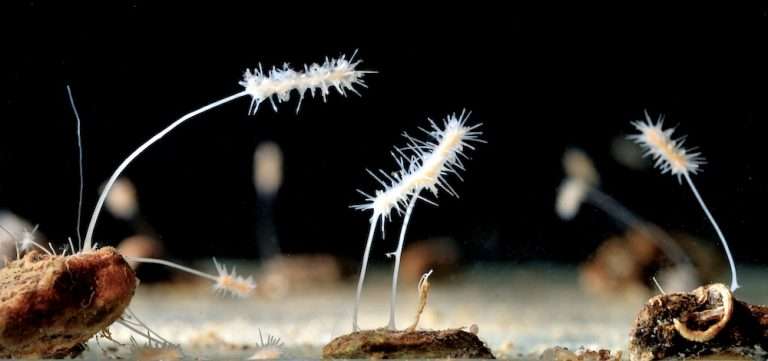
The Evolutionary constraints and adaptive resilience team (EVOCARE) investigates the evolutionary processes that determine the capacity of organisms to cope with rapid environmental change. Its research focuses on how current anthropogenic changes disrupt key biological functions and highly integrated ancestral traits shaped by the evolutionary history of species. These functions have contributed to the emergence of specific ecological adaptations and life-history strategies, but they can become sources of vulnerability when they exhibit low evolvability. This results from developmental, genetic and functional constraints that limit their capacity to adjust to rapid environmental change. Understanding the extent to which this evolutionary inertia affects the ability of species to adapt is a major issue for evolutionary biology and conservation. In this context, the team’s research focuses on an integrative conservation approach that combines biology, molecular and cellular biology, physiology, and population genomics. Our objectives are to: (i) identify key biological functions and associated ancestral traits; characterise the developmental, genetic and functional basis of evolutionary constraints; and determine their influence on adaptation trajectories; (ii) characterise the plasticity of species in response to environmental disturbances; identify the underlying molecular and physiological mechanisms; and assess their relationship with genetic variation and the adaptive potential of populations; (iii) integrate genomic signatures, demographic histories, and the evolution of life-history traits; assess the influence of evolutionary constraints on population dynamics and resilience to human pressures; and (iv) propose, test, and evaluate management and conservation measures based on a mechanistic understanding of species’ adaptive capacities and limits.
These themes are currently being explored through several models of marine organisms, including carnivorous sponges and fish species of conservation and heritage value that exhibit contrasting reproductive strategies. These approaches could also be applied to other organisms to identify general principles of resilience and vulnerability to environmental changes.